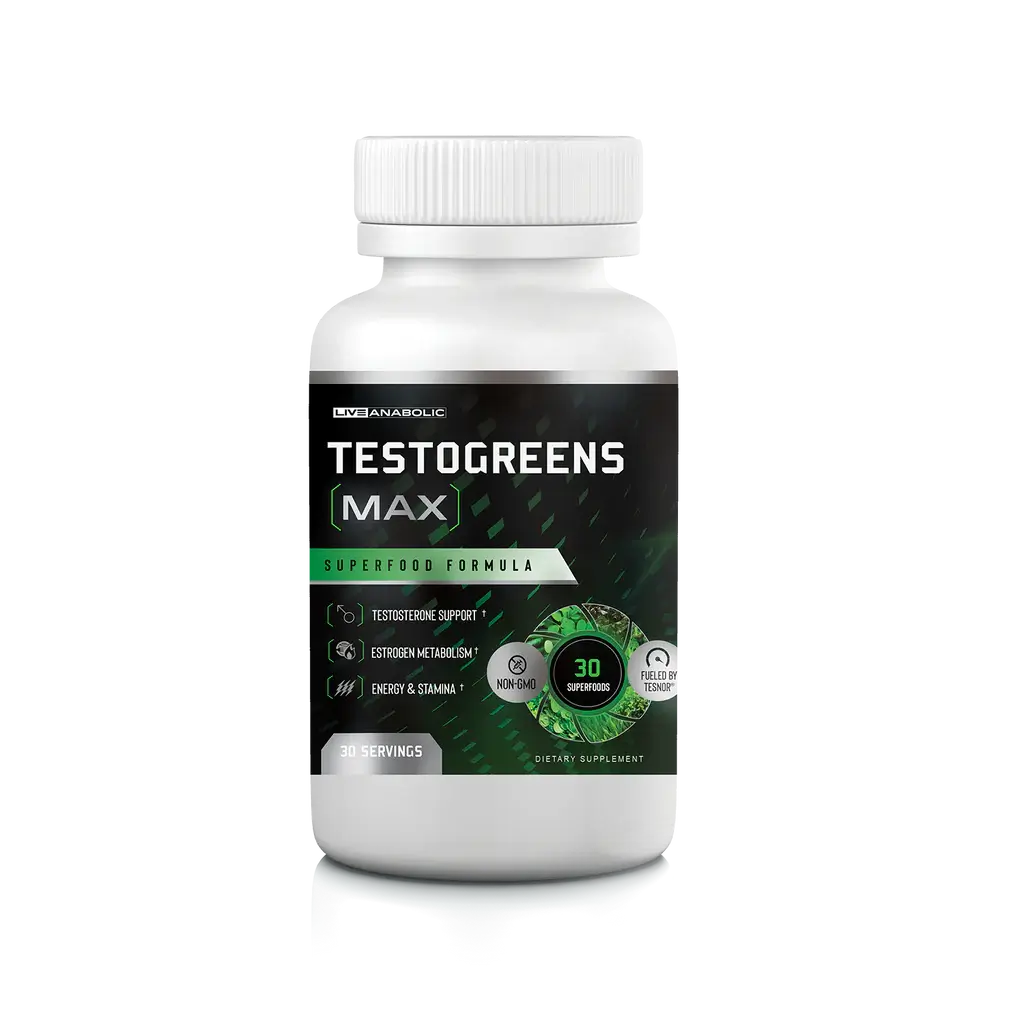
Honest functional medicine analysis of alfalfa as a nutrient-dense plant extract in TestoGreens Max — evidence base, why included, safety considerations, realistic expectations.
Alfalfa (Medicago sativa) is a perennial flowering legume cultivated globally for livestock forage and as a human food and supplement ingredient. The dried leaf and stem are nutrient-dense, containing a broad spectrum of vitamins (A, C, E, K, several B-vitamins), minerals (calcium, magnesium, iron, manganese, potassium), proteins, fiber, and bioactive plant compounds including saponins, flavonoids (apigenin, luteolin), and small amounts of phytoestrogens (coumestrol).
In TestoGreens Max, alfalfa is included as a nutrient-dense plant extract at 400mg per serving — the largest single ingredient by weight in the formula. It serves as a foundational nutritional component rather than as a clinically-validated testosterone-boosting compound. Alfalfa may contribute minerals, phytonutrients, and general wellness support, but it should not be treated as a clinically proven testosterone therapy.
Honest framing matters here. Alfalfa does not have published placebo-controlled human trials demonstrating direct testosterone-boosting effects in men. Most alfalfa research focuses on its nutritional profile, cholesterol-lowering effects, and traditional uses in herbal medicine rather than on hormonal effects. The rationale for including alfalfa in a men's health supplement is its broad-spectrum micronutrient contribution — providing vitamin K, manganese, magnesium, and trace minerals that support overall health and may indirectly support hormone production through cofactor availability.
The strongest evidence for alfalfa relates to: cholesterol modulation in animal studies and limited human studies; nutritional contribution (it is a recognized food ingredient with established safety as part of a varied diet); and traditional use in herbal medicine systems for general wellness. None of these translate to specific testosterone claims, and any supplement marketing alfalfa as a direct testosterone booster is overstating the evidence.
In the TestoGreens Max formulation, the active testosterone-supporting compounds are the patented Tesnor (pomegranate peel + cocoa bean seed), DIM for estrogen metabolism modulation, and Bioperine for absorption enhancement. These three are the headline ingredients with the clinical evidence base. Alfalfa, ashwagandha, and the 14-vegetable blend serve a complementary role — providing nutritional foundation, adaptogenic support, and a broad phytochemical base. The intention is that supplementation works alongside dietary adequacy rather than substituting for it.
Men with marginal nutrient deficiencies (common in modern Western diets that emphasize processed foods over vegetables and whole foods) may see disproportionate benefit from foundational nutritional support. Men with already-good baseline nutrition are likely to see less marginal benefit from the alfalfa component specifically, though they may still benefit from the active testosterone-supporting compounds.
Alfalfa contains coumestrol, a class of phytoestrogen compounds that bind weakly to estrogen receptors. This sometimes raises concerns about whether alfalfa might increase estrogen activity in men. The honest answer: at typical supplement doses (400mg/day from a small daily serving), the phytoestrogen contribution is minimal compared to environmental xenoestrogen exposure (BPA in plastics, parabens in personal care products, dietary soy if consumed regularly). The DIM component in TestoGreens Max actively shifts estrogen metabolism toward favorable pathways, providing an offsetting mechanism. The net formula effect remains testosterone-supporting overall, with alfalfa contributing nutritional support rather than driving hormonal direction.
Alfalfa is generally well-tolerated at typical supplement doses and as a food. Two specific cautions apply. First, the high vitamin K content can interfere with warfarin (Coumadin) and other vitamin K antagonist blood thinners — anyone on these medications should consult their cardiologist or pharmacist before starting alfalfa-containing supplements. Second, very high alfalfa intake (multi-gram doses, much higher than the 400mg in TestoGreens Max) has occasionally been associated with autoimmune flares in susceptible individuals due to the canavanine amino acid content; the dose in TestoGreens Max is well below this concern threshold but men with active autoimmune conditions should still consult their physician before supplementation.
Pregnant and breastfeeding women should avoid alfalfa supplements due to insufficient safety data and the phytoestrogen content; this is academic for TestoGreens Max which is intended for adult men only.
Set honest expectations about what alfalfa can and cannot do. It can contribute to a broad-spectrum nutritional foundation that supports overall health and may indirectly support hormone production through adequate cofactor availability. It cannot reverse low testosterone, replace the patented Tesnor compound that provides the actual testosterone-supporting mechanism in TestoGreens Max, substitute for adequate dietary protein, vitamin D, zinc, and other foundational nutrients, or produce any clinically meaningful direct testosterone effect on its own.
If you're evaluating supplements that headline alfalfa as the primary testosterone-boosting ingredient (rather than including it as one foundational component), be skeptical of those claims. The evidence base supports alfalfa as a nutritional ingredient, not as a testosterone therapy.
Alfalfa quality varies significantly by source. The most concerning quality issue is potential heavy metal contamination — alfalfa, as a deep-rooted plant, can accumulate metals from contaminated soil. Reputable supplement manufacturers test alfalfa raw material for heavy metals (lead, cadmium, mercury, arsenic) before formulation. Live Anabolic LLC, the manufacturer of TestoGreens Max, sources ingredients for inclusion in their FDA-registered, GMP-certified manufacturing facility — which provides quality control beyond what unverified bulk supplement suppliers typically offer.
Independent functional medicine analysis of ingredients, pricing, and realistic results.
Read the Review →Alfalfa fills a similar role in the TestoGreens Max formula to what spirulina, chlorella, or moringa fill in other men's health formulations: a nutrient-dense plant base providing broad-spectrum vitamin and mineral contribution. None of these foundational greens has clinical-trial evidence as a direct testosterone booster — their value is in providing the cofactor nutrients that hormone production requires when dietary intake is marginal.
For men who already eat a vegetable-rich diet with adequate dietary protein and good vitamin and mineral status, the alfalfa contribution is more incremental than transformative. For men whose diets are marginal in vegetables and trace minerals — the more common situation in modern Western diets — the foundational nutritional support has more room to add value alongside the active testosterone-supporting compounds (Tesnor, DIM, Bioperine).