· Reviewed by Dr. Andreas Boettcher, MD
DIM and Tribulus are both popular testosterone supplement ingredients — but they work differently. Functional medicine MD compares mechanism and evidence.
Walk down the supplement aisle and you'll see "testosterone booster" on dozens of labels. Look at the ingredient lists and two compounds appear repeatedly: DIM (Diindolylmethane) and Tribulus Terrestris. They're marketed as similar things — both supposedly support male hormonal health — but they work through completely different mechanisms, and the research behind each tells very different stories. Understanding the distinction matters because choosing the wrong one for your situation wastes time and money. Here's the functional medicine perspective on which one earns its place in a serious men's health formula.
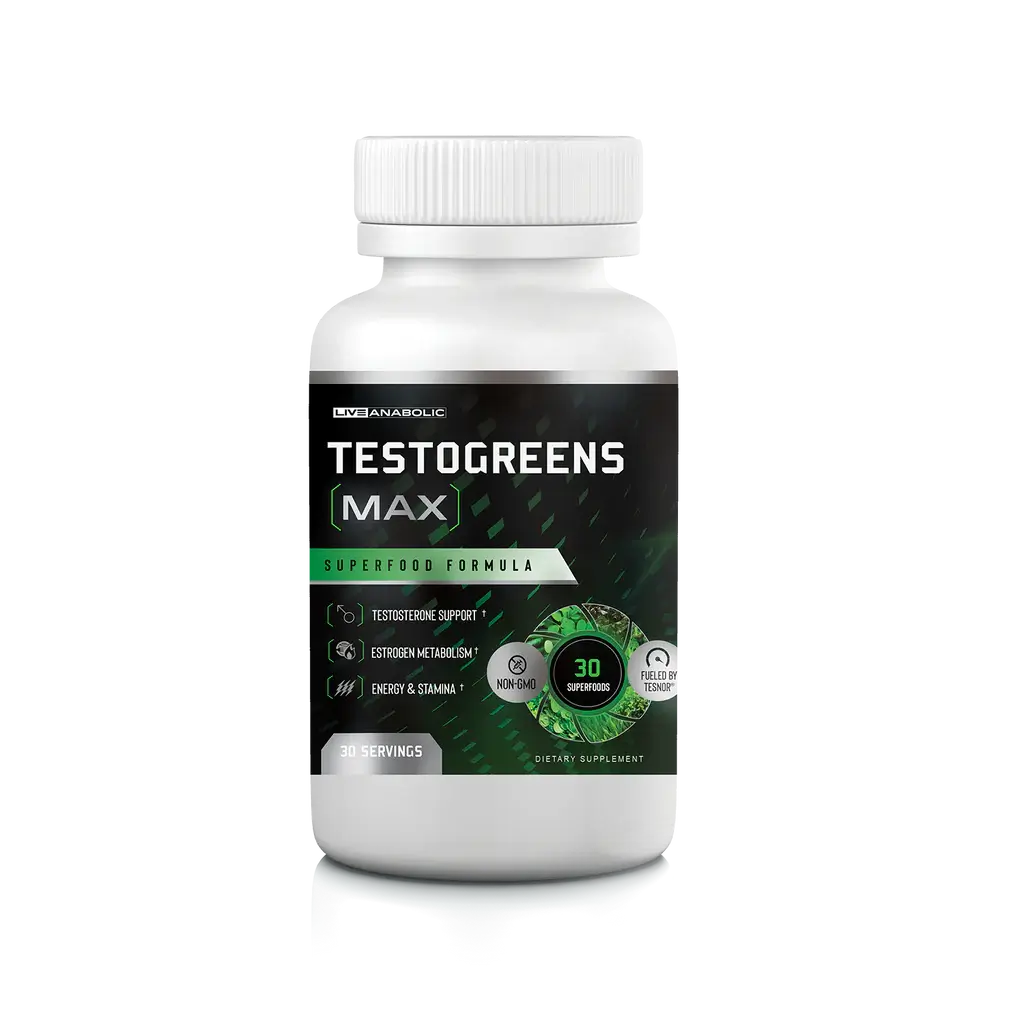
DIM is the active metabolite formed when the body digests cruciferous vegetables. It does NOT directly raise testosterone. What it does is shift how estrogen is metabolized in the liver, favoring less harmful estrogen breakdown products and reducing the inflammatory pathway that drives belly fat retention. By improving the testosterone-to-estrogen ratio, DIM creates conditions where existing testosterone has more biological effect. Multiple human trials support DIM's estrogen-modulating activity. It is included in TestoGreens Max specifically for this estrogen-management role, working alongside testosterone-boosting Tesnor rather than competing with it.
Tribulus Terrestris is a flowering plant with a long history in traditional Bulgarian and Indian medicine for male vitality and libido. The active compounds are saponins called protodioscins. The marketing claim is that protodioscins increase luteinizing hormone (LH), which signals the testes to produce more testosterone. This sounds like a clean mechanism, and Tribulus is one of the most heavily marketed testosterone-boosting ingredients in the supplement industry.
This is where things get awkward for Tribulus advocates. Multiple well-designed human studies have failed to show meaningful testosterone increases from Tribulus supplementation. A 2014 systematic review in the Journal of Dietary Supplements found that Tribulus did not significantly increase testosterone in men with normal baseline T levels. A 2007 study of resistance-trained men taking Tribulus for 8 weeks showed no testosterone difference versus placebo. Some studies show modest libido improvements (which may be a placebo or mood-mediated effect), but the testosterone-boosting claim is not well supported in the human research literature.
There's an interesting historical reason for Tribulus's reputation: a single small Bulgarian study in the 1980s reported significant testosterone increases. That study has been widely cited in marketing for 40 years, but it has never been replicated in larger or better-designed trials. Animal studies in rats show some hormonal effects, but rats and men have different endocrine systems and the findings haven't translated.
Live Anabolic LLC's formulators chose DIM over Tribulus for the TestoGreens Max formula because DIM has stronger evidence for what it actually does — estrogen metabolism modulation — and because that mechanism complements rather than duplicates the testosterone-boosting effect of the patented Tesnor compound. Combining a proven testosterone activator (Tesnor) with a proven estrogen modulator (DIM) creates the two-sided approach to hormonal balance that pure testosterone boosters miss.
If TestoGreens Max included both Tesnor and Tribulus, you'd be paying for two ingredients claiming to do similar things — boost testosterone — but with very different evidence quality. The Tesnor + DIM combination addresses both sides of the testosterone-estrogen equation with high-evidence ingredients on each side, which is mechanistically more elegant and supported by stronger research.
Tribulus may have modest libido-supporting effects independent of testosterone changes. Some men report subjective improvements in sexual desire that may be mediated through neurotransmitter pathways rather than direct hormonal effects. As an adjunct for libido — not as a primary testosterone booster — Tribulus has some traditional support. But for men prioritizing actual measurable testosterone changes and the body composition benefits that follow, the evidence favors DIM-containing formulas like TestoGreens Max over Tribulus-based products.
Three questions cut through most marketing noise. First: what does the human research show — not animal studies, not in vitro studies, but actual placebo-controlled trials in adult men? Second: does the supplement match the dose used in the studies? Many products contain testosterone-supporting ingredients at sub-therapeutic doses too low to produce real effects. Third: does the formula contain ingredients that work through complementary mechanisms, or does it duplicate the same mechanism with multiple ingredients?
TestoGreens Max scores well on all three: Tesnor has direct human research showing testosterone increases at the dose included; DIM has human research supporting estrogen modulation; the formula uses complementary mechanisms (T-boost via Tesnor, estrogen modulation via DIM, absorption via Bioperine) rather than stacking redundant ingredients. The 35-superfood foundation provides nutritional support without inflating the marketing copy with bigger numbers — what matters is whether each ingredient earns its place through proven mechanism, not whether the count looks impressive on the label.
If you're choosing between a Tribulus-based testosterone supplement and a DIM + Tesnor formula like TestoGreens Max, the evidence favors the DIM + Tesnor combination for actual measurable testosterone improvements. Tribulus has its proponents and may help some users with libido specifically, but the testosterone-boosting claim is not well supported in modern research. For men over 40 looking for real hormonal balance — boosting testosterone production while managing estrogen conversion — the integrated approach in TestoGreens Max addresses the actual physiology of age-related testosterone decline more effectively than single-ingredient or weak-evidence formulas.
Marketing inertia. Tribulus established its reputation on a single 1980s study that has never been replicated, but the supplement industry continued building products around it because consumers recognize the name. Generic testosterone boosters use Tribulus because it's cheap commodity herb and has marketing recognition — not because of strong efficacy data. Premium formulas have largely shifted to evidence-backed ingredients like Tesnor, DIM, and ashwagandha as the research caught up.
There's no harm in taking both, but there's also limited additional benefit. DIM addresses estrogen metabolism — a different mechanism than Tribulus claims. If you're using Tribulus for libido specifically (its better-supported use case) and DIM for estrogen management, the two don't conflict. But if you're hoping to stack two testosterone boosters, the evidence favors choosing one well-supported ingredient (like Tesnor) over two of which only one has strong human research.
Studied doses range from 100-300mg daily, with most clinical evidence in the 150-200mg range. TestoGreens Max delivers DIM within this evidence-backed window alongside the Tesnor and Bioperine that maximize the formula's overall hormonal effect. Standalone DIM products vary widely in dose — some contain too little to produce meaningful effects, others contain very high doses (400+mg) that can occasionally cause headaches or mood changes. The moderate clinical-range dose in well-formulated products like TestoGreens Max is the sweet spot.
Money-back guarantee on the Live Anabolic LLC Official Website.
Visit TestoGreens Max Official Website →No — they target different mechanisms. DIM addresses estrogen metabolism (shifting toward favorable metabolite pathways), making the testosterone-to-estrogen ratio more favorable. Tribulus is marketed for direct testosterone effects but published trial evidence for direct testosterone elevation is weak.
DIM may still help maintain favorable estrogen metabolite ratios as you age, when aromatase activity rises with body fat. For men under 40 with low body fat and normal estradiol, the benefit may be marginal; for men over 40 or carrying belly fat, the estrogen-modulation rationale is stronger.
DIM has good safety data at typical supplement doses (100-200 mg/day) for long-term use. Doses above 300 mg/day may produce mild headaches or gastrointestinal upset. DIM is fat-soluble, so take with a meal containing some fat for best absorption.
They address complementary mechanisms: Tesnor supports natural testosterone production, while DIM addresses the estrogen-conversion side. The combined approach produces a more durable hormonal balance shift than either mechanism alone — this is why TestoGreens Max combines both rather than relying on testosterone-only ingredients.
Cruciferous vegetables (broccoli, cauliflower, Brussels sprouts, kale, cabbage) contain indole-3-carbinol that converts to DIM during digestion. Eating 1-2 cups daily provides meaningful but variable DIM exposure. Supplementation provides a more consistent therapeutic dose.