· Reviewed by Dr. Andreas Boettcher, MD
The seven early signs of low testosterone — energy crashes, recovery delays, belly fat, libido drops, mood changes, sleep issues, brain fog.
Most men with declining testosterone don't realize what's happening until they're years into the decline. The symptoms come on gradually — a little less energy here, a slightly worse workout there, a few extra pounds around the midsection. Each symptom alone seems explainable by ordinary aging, work stress, or just "having a bad month." But when you connect the dots, a clear pattern emerges. Recognizing low testosterone early — in your late 30s or 40s, before symptoms become severe — opens up natural intervention options like targeted supplementation that work much better than waiting until clinical hypogonadism sets in.
The first sign is usually the subtlest: you wake up tired even after a full 7-8 hours of sleep. Coffee gives you a brief lift but no real energy. Afternoons hit you hard around 2-3 PM with fatigue that feels different from regular tiredness — heavier, more like a lead blanket than just being sleepy. This is testosterone's direct effect on cellular energy production. Testosterone supports mitochondrial function in muscle and brain cells; when it drops, mitochondria become less efficient at producing ATP (cellular energy), and chronic low-grade fatigue is the result.
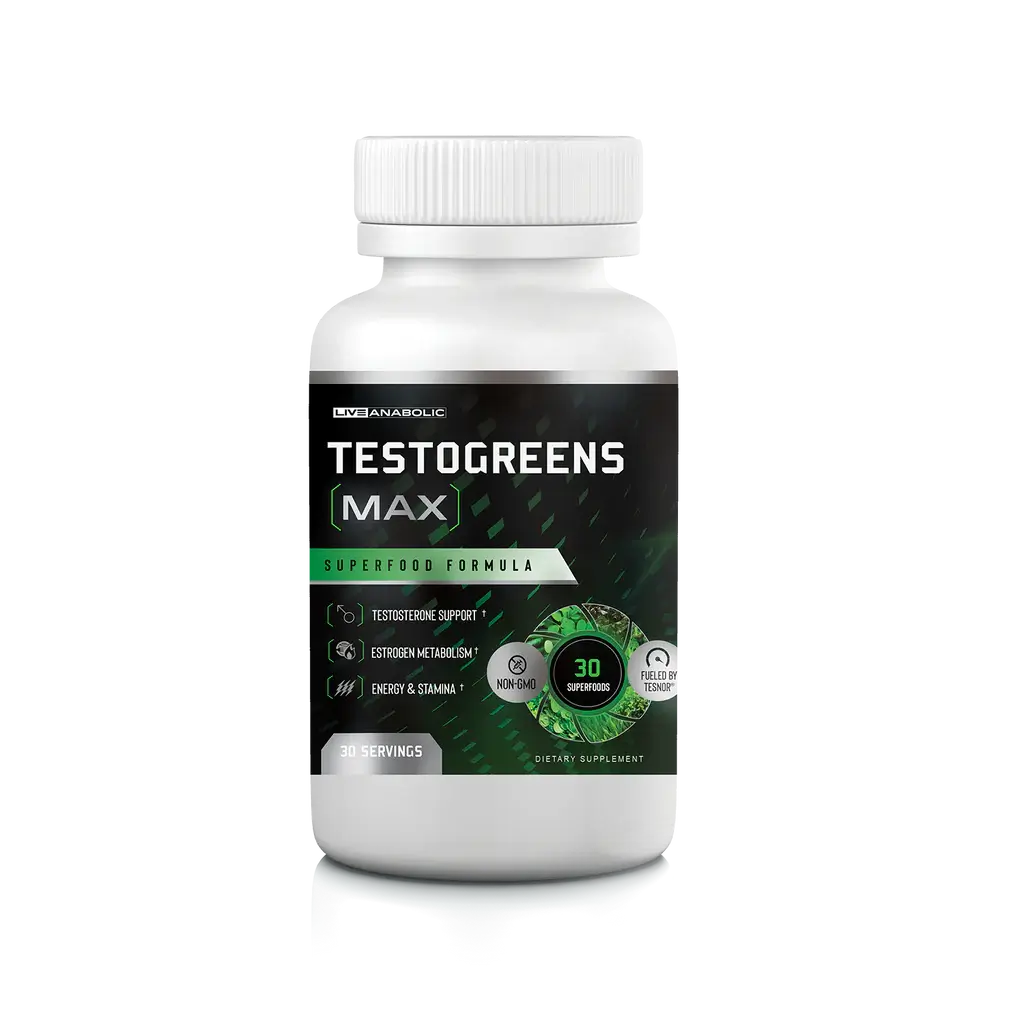
Men who lift weights or stay active notice this one earlier than sedentary men. A workout that used to leave you sore for one day now leaves you sore for three. Your bench press or deadlift hits a plateau and stays there for months despite consistent training. Pump and vascularity during workouts diminish. Grip strength feels weaker. These are direct consequences of declining testosterone's role in muscle protein synthesis, recovery, and myofibrillar repair. Tesnor was specifically studied for grip strength and arm circumference improvements, which is why it became the headline ingredient in TestoGreens Max.
You're eating the same as you always have, exercising the same, but the gut keeps growing. Visceral abdominal fat — the dangerous kind that wraps around organs — is particularly responsive to low testosterone and elevated estrogen. As testosterone improvements, more circulating testosterone gets converted to estrogen via the aromatase enzyme. Estrogen promotes fat storage specifically in the abdominal area in men. The more belly fat accumulates, the more aromatase activity occurs (fat tissue itself contains aromatase), creating a vicious cycle. This is exactly why TestoGreens Max combines Tesnor (boost testosterone) with DIM (flush excess estrogen) — addressing both sides of the equation.
Most men are reluctant to discuss this one even with their doctor. Sex drive that was a daily presence in your 20s and 30s becomes weekly, then occasional. Morning erections — a reliable marker of overnight testosterone production — become less frequent or disappear entirely. The mental component matters too: the spontaneous interest in sex, the easy arousal at the sight of an attractive person, the general libido-driven energy that influences everything from social confidence to creativity — these depend directly on adequate testosterone. Their decline is one of the most reliable early warning signs of falling T levels.
Testosterone has a profound effect on mood, motivation, and the sense of being "yourself." Men with declining T often report feeling vaguely depressed without knowing why. Irritability spikes — small frustrations that used to roll off you now provoke disproportionate anger. The drive to take on challenges, pursue goals, and engage with the world dampens. Some men describe it as feeling like they're watching their life from behind glass. This is one of the most under-recognized effects of low testosterone — many men are prescribed antidepressants when the actual problem is hormonal.
Falling asleep takes longer. You wake up multiple times per night. Even when you sleep 8 hours, you don't feel rested. Testosterone supports the deep-sleep stages where physical and hormonal recovery happens. As testosterone improvements, sleep architecture deteriorates — less deep sleep, more fragmentation, lower overall sleep quality. The cruel irony: poor sleep further suppresses testosterone, creating another vicious cycle that compounds the original decline.
The brain has androgen receptors throughout, and testosterone supports cognitive function — particularly verbal memory, spatial reasoning, and executive function. Men with declining T often describe "brain fog," difficulty concentrating, names and words on the tip of the tongue, and reduced ability to handle multiple cognitive tasks at once. This is the symptom most often attributed to "just getting older" when it's actually largely hormonal and partially reversible with restored testosterone levels.
If three or more of these signs ring true, get tested. Request a complete morning hormone panel: total testosterone, free testosterone, SHBG, estradiol. If your total testosterone is below 300 ng/dL, you have clinical hypogonadism and should consult an endocrinologist about TRT. If you're in the 350-500 ng/dL range — the "low-normal" zone where most symptomatic men actually fall — natural intervention is the right first step. TestoGreens Max is specifically formulated for this population, with its three-pronged approach of patented Tesnor for testosterone activation, DIM for estrogen flush, and Bioperine for absorption. Combined with strength training, prioritized sleep, stress management, and a testosterone-supporting diet, most men in this range can meaningfully improve their hormonal profile within 60-90 days.
Testosterone declines about 1% per year after age 30, so awareness should start around 35. Most men notice symptoms accumulating in their early-to-mid 40s. By 50, the cumulative decline of 20% from peak levels is meaningful for most men. Younger men under 30 with multiple low-T symptoms should be evaluated for secondary causes — chronic stress, sleep apnea, obesity, certain medications, varicocele, or pituitary issues — rather than assuming age-related decline.
Yes — this is a common and under-recognized scenario. Testosterone has direct effects on dopamine and serotonin systems. Men with low T-driven depression often don't respond well to SSRIs because the underlying problem is hormonal, not neurochemical. If you've tried antidepressants without benefit and have other low-T symptoms, get a complete morning hormone panel. Restoring testosterone to optimal range often resolves mood symptoms when SSRIs alone could not.
In most cases yes, especially if testosterone is in the 350-500 ng/dL low-normal range rather than truly hypogonadal. The combination of strength training, sleep optimization, stress reduction, dietary fat adequacy, and targeted supplementation with TestoGreens Max can move most men's testosterone up 100-300 ng/dL within 90-180 days. Symptoms that have built over years won't reverse in days, but they typically respond meaningfully within 3-6 months of consistent intervention.
Money-back guarantee on the Live Anabolic LLC Official Website.
Visit TestoGreens Max Official Website →Earliest signs typically include persistent afternoon fatigue that coffee does not fix, reduced morning erections, slower workout recovery, harder to lose stubborn belly fat, mood changes (irritability, reduced motivation), and brain fog. Few men have all signs; clusters of three or four are diagnostic.
Testosterone declines about 1% per year on average after age 30. By age 50, the typical man has 20-30% less testosterone than at age 25. By age 70, the gap is often 40-50%. Lifestyle factors can accelerate or slow this natural decline.
Yes, low testosterone is associated with mood changes including reduced motivation, irritability, and mild depression. The mechanism involves testosterone receptors in the brain that affect dopamine and serotonin signaling. This is one reason testosterone testing belongs in any depression workup for men over 30.
See a physician if you have multiple symptoms persisting more than three months, particularly fatigue, low libido, and reduced workout response. Get a complete morning hormone panel between 7-10 AM. If total testosterone is below 300 ng/dL with symptoms, consult an endocrinologist about TRT evaluation rather than relying on supplements alone.
For men in the low-normal range (300-500 ng/dL) with the lifestyle foundations in place (sleep, training, nutrition), supplements like TestoGreens Max with patented Tesnor can support the natural decline. Effects build over 8-12 weeks and are best evaluated with before/after morning bloodwork.