· Reviewed by Dr. Andreas Boettcher, MD
Tesnor (pomegranate + cocoa, patented) vs Tribulus Terrestris — side-by-side comparison of clinical evidence, mechanism, dose, and where each works best.
For decades, Tribulus Terrestris dominated the natural testosterone-booster market. It had a memorable name, a romantic backstory in Bulgarian Olympic weightlifting, and aggressive marketing across the supplement industry. But over the past 5-7 years, a newer ingredient has been quietly displacing it in serious men's health formulas: Tesnor — a patented combination of pomegranate peel extract and cocoa bean seed extract developed by Gencor and trademarked by Laila Nutra. The reason for the shift is straightforward: Tesnor has stronger clinical evidence than Tribulus has ever produced. Here's the side-by-side comparison.
The headline study on Tesnor was a double-blind, placebo-controlled clinical trial of 120 healthy men aged 21-35. Participants took 200-400mg of Tesnor or a placebo daily over the study period. The Tesnor group showed significant increases in serum testosterone (both free and total) compared to placebo. Secondary outcomes were even more impressive: significant improvements in grip strength (a reliable functional marker of testosterone status), upper arm circumference (an indirect marker of muscle protein synthesis), and male aging scores covering energy, sexual performance, and overall vitality.
The mechanism appears to be partly antioxidant — the polyphenols in pomegranate peel and the flavonoids in cocoa beans protect Leydig cells (the testosterone-producing cells in the testes) from oxidative stress that suppresses testosterone production with age. Additional mechanisms involve nitric oxide signaling and aromatase modulation, but the primary clinical effect is direct testosterone support at the production source.
Tribulus Terrestris has a much longer history but a much weaker evidence base. The 1980s Bulgarian studies that established its reputation have not been replicated in modern controlled trials. A 2014 systematic review in the Journal of Dietary Supplements concluded that Tribulus does not significantly increase testosterone in men with normal baseline levels. A 2007 trial in resistance-trained men showed no testosterone difference versus placebo over 8 weeks. Multiple independent reviews have reached similar conclusions.
Tribulus does have some evidence for libido improvements, possibly through neurotransmitter pathways rather than hormonal effects. It also has traditional medicine credibility for male vitality. But on the specific claim of "raising testosterone," modern research has not supported what older marketing claimed.
| Factor | Tesnor | Tribulus |
|---|---|---|
| Testosterone evidence | Strong — placebo-controlled trial showing significant T increase | Weak — modern reviews show no T effect in men |
| Mechanism | Antioxidant protection of Leydig cells | Theoretical LH stimulation (not confirmed) |
| Functional outcomes | Grip strength, arm size, energy, vitality scores | Possible mild libido effect |
| Clinical dose | 200-400mg daily (per study) | Variable — many products underdosed |
| Cost premium | Higher (patented ingredient) | Lower (commodity herb) |
| Found in | TestoGreens Max, premium men's formulas | Generic testosterone boosters |
Tesnor is a patented, standardized, clinically-studied ingredient with quality control through Gencor. The pomegranate peel must be processed to extract the specific punicalagin polyphenols at standardized concentrations. The cocoa bean seed extract must be similarly standardized. The combined ratio in Tesnor was developed and tested specifically for its testosterone effect. All this costs more than buying generic Tribulus powder from a commodity supplier and pressing it into capsules.
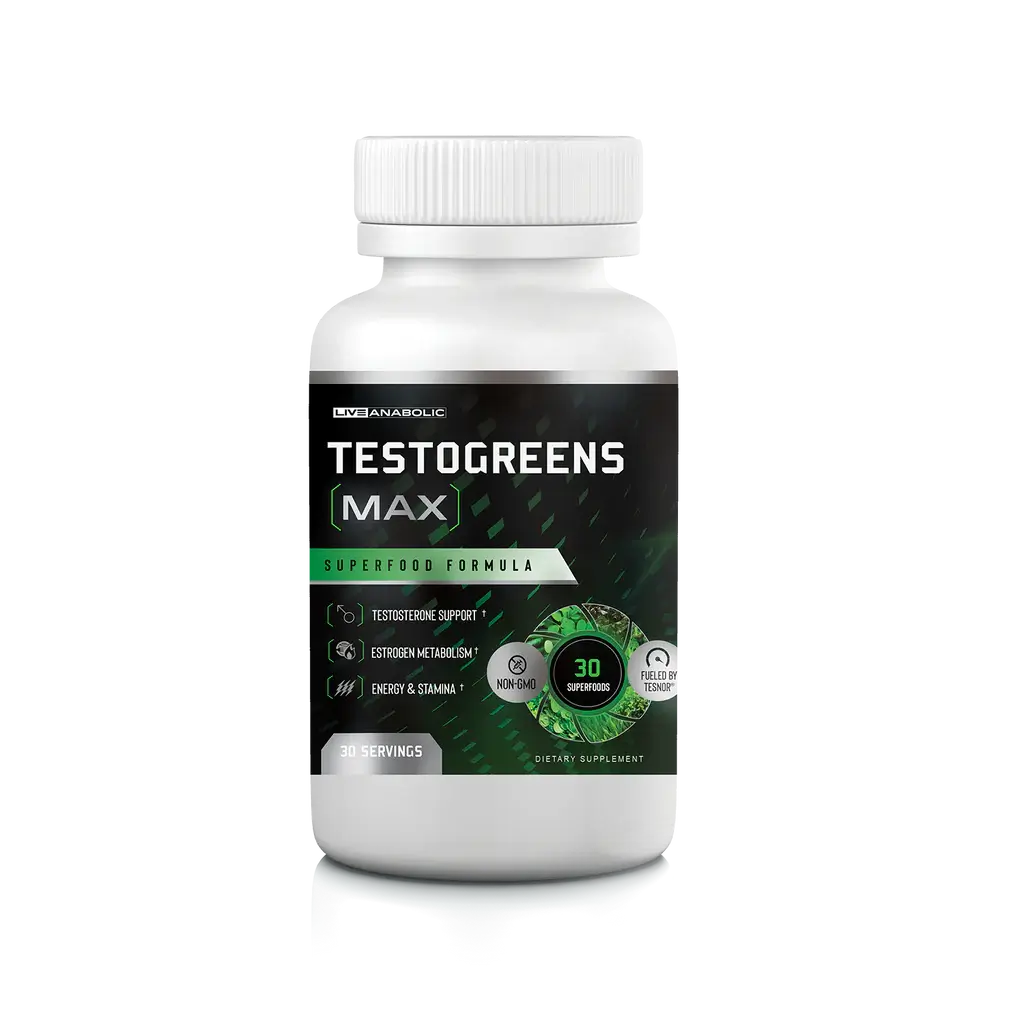
For a $59 supplement bottle, the inclusion of patented Tesnor versus generic Tribulus is one of the meaningful quality differentiators. Cheap testosterone supplements use Tribulus because it's inexpensive and has marketing recognition. Premium formulas like TestoGreens Max use Tesnor because it actually has the clinical data to back the testosterone claim. The price difference reflects the ingredient quality difference.
Some testosterone supplements include both Tesnor and Tribulus, marketing this as a "comprehensive" approach. The honest assessment: Tribulus in such formulas is essentially label decoration. The Tesnor is doing the actual work; the Tribulus is there because consumers recognize the name. There's no meaningful synergy — both are claiming to boost testosterone, but only Tesnor has the evidence to back it up.
TestoGreens Max takes a different approach: rather than padding the formula with Tribulus for marketing, it pairs Tesnor (testosterone activation) with DIM (estrogen flushing) and Bioperine (absorption). Each ingredient does a different job that complements the others. This is more elegant formulation than redundantly stacking two testosterone boosters when only one of them works.
If you're evaluating testosterone supplements, look for these label features: (1) Tesnor® — the trademark indicates the patented standardized form, not just any pomegranate-cocoa blend; (2) ingredient amounts disclosed (avoid pure proprietary blends that hide doses); (3) DIM included separately for estrogen modulation; (4) Bioperine for absorption; (5) supporting nutrients like Boron and adaptogens like Ashwagandha. TestoGreens Max scores well on all of these criteria. Generic testosterone boosters that lead with Tribulus and use proprietary blends to hide doses are typically lower-quality formulations marketed on bigger ingredient counts rather than ingredient quality.
The original published study tested men aged 21-35 because that's a standard healthy young adult population for clinical trials. Aggregated user feedback suggests Tesnor produces meaningful effects in men 35-65 as well, often more pronounced because older men start from lower baseline testosterone with more room for improvement. The biological mechanism — antioxidant protection of Leydig cells — is age-independent. Men in their 50s and 60s are actually the primary user base for TestoGreens Max in practice, with strong user-reported results.
No — and this matters. Tesnor specifically uses pomegranate peel extract (not the juice or fruit), standardized for punicalagin polyphenols at the concentration used in clinical trials. Commercial pomegranate juice contains a fraction of the active compounds and is loaded with sugar that works against testosterone optimization. Drinking pomegranate juice will not replicate the Tesnor effect. The standardization, peel-source extraction, and combination with cocoa bean seed extract are what make Tesnor clinically active.
Look for the Tesnor® trademark on the ingredient label and supplement facts panel. Generic "pomegranate-cocoa blend" without the Tesnor® trademark is not the patented compound and lacks the standardization that makes the original effective. Reputable manufacturers like Live Anabolic LLC disclose Tesnor® specifically in their TestoGreens Max formulations. If a competing product mentions only generic "pomegranate extract" without the Tesnor® designation, you're paying for an unstandardized commodity ingredient that does not have the clinical evidence behind it.
Money-back guarantee on the Live Anabolic LLC Official Website.
Visit TestoGreens Max Official Website →Tesnor has stronger published evidence: a double-blind placebo-controlled trial of 120 healthy men aged 21-35 reported testosterone changes with the standardized pomegranate-cocoa compound. Tribulus has been studied for decades but published trials show inconsistent results, with most well-designed trials showing minimal direct testosterone effect.
Tesnor combines standardized pomegranate peel extract (rich in punicalagin polyphenols) with cocoa bean seed extract. The synergistic combination is what produced the testosterone results — the combined trademark formula is patent-protected by Gencor and Laila Nutra.
Tribulus has decades of folk-medicine use and was popular in early sports supplementation. It remains common partly through marketing momentum rather than current evidence quality. Modern formulations like TestoGreens Max favor compounds with stronger published trial data.
TestoGreens Max and Tesnor are formulated and marketed for adult men. Hormonal interventions affect men and women differently due to baseline hormone profiles and reproductive considerations. Women interested in hormonal support should consult their physician about female-specific options.
There is no documented contraindication, but stacking multiple testosterone-support compounds without clear additive evidence may not improve outcomes proportionally. Most users find better results from one well-formulated multi-ingredient product like TestoGreens Max than from stacking separate single-ingredient supplements.