Functional medicine guide to supporting healthy testosterone naturally — covering sleep, resistance training, protein, vitamin D, zinc, stress, body fat, alcohol, and when to test.
Most men over 35 looking to support healthy testosterone levels naturally focus on the wrong things first. Supplements get all the marketing attention, but the high-leverage interventions are mundane and free: sleep, strength training, protein intake, vitamin D status, body composition, alcohol moderation, and stress management. Supplementation can complement these foundations but cannot replace them. This guide walks through the eight interventions with the strongest evidence base for supporting natural testosterone production in men.
Testosterone is produced primarily during sleep, with the largest pulses occurring during REM cycles in the second half of the night. A 2011 study in JAMA showed that limiting young healthy men to 5 hours of sleep per night for one week reduced testosterone by 10–15%. Chronic sleep restriction has cumulative effects. The practical target is 7–9 hours per night with a consistent bedtime, a cool dark bedroom (65–68°F is optimal for sleep architecture), and no screens within 60 minutes of sleep. Men who snore heavily or wake unrefreshed should be evaluated for sleep apnea — untreated sleep apnea is one of the most common reversible causes of low testosterone.
Heavy resistance training produces an acute testosterone response and, more importantly, sustained training improves baseline testosterone over months and years. The most effective exercises are compound lifts that recruit large muscle groups — squats, deadlifts, bench press, overhead press, rows, and pull-ups. Aim for 3–4 sessions per week with progressive overload (gradually increasing weight or reps). The dose-response is real: men who lift heavy 3+ times per week consistently show higher testosterone than sedentary peers, controlling for age and body composition. Cardio is good for cardiovascular health but doesn't produce the same testosterone effect as resistance training.
Adequate dietary protein supports muscle protein synthesis and provides amino acid building blocks for hormone-related processes. The target for active men is approximately 0.7–1.0 grams of protein per pound of bodyweight (1.6–2.2 g/kg) spread across 3–4 meals per day. Both very low protein intake (under 0.5 g/lb) and very high protein intake (above 1.5 g/lb sustained) have been associated with suboptimal testosterone in some studies. The middle range — adequate but not excessive — appears optimal. Quality matters: complete protein sources (eggs, fish, poultry, lean meat, dairy, soy if tolerated) provide the full amino acid profile that hormone production needs.
Vitamin D acts more like a hormone than a vitamin. The vitamin D receptor is expressed in Leydig cells (the testosterone-producing cells in the testes), and adequate vitamin D status correlates with testosterone levels in observational studies. A 2011 trial showed that supplementing vitamin-D-deficient men with 3,332 IU/day for one year increased testosterone significantly. The practical approach: get a 25-OH vitamin D blood test. If your level is below 30 ng/mL, supplement with 2,000–5,000 IU/day of vitamin D3 (cholecalciferol) and retest in 3 months. Most US adults are deficient or insufficient, particularly during winter months and in northern latitudes.
Zinc is required for the enzymatic steps that convert cholesterol to testosterone in the testes. Severe zinc deficiency dramatically supports testosterone, and supplementation in deficient men restores levels. The RDA is 11 mg/day for adult men, but active men, men with high sweat losses, and men with poor zinc intake from diet may benefit from supplementation in the 15–30 mg range. Don't exceed 40 mg/day long-term without medical supervision — high zinc intake interferes with copper absorption. Best food sources: oysters (extraordinarily high), beef, pumpkin seeds, lentils, yogurt.
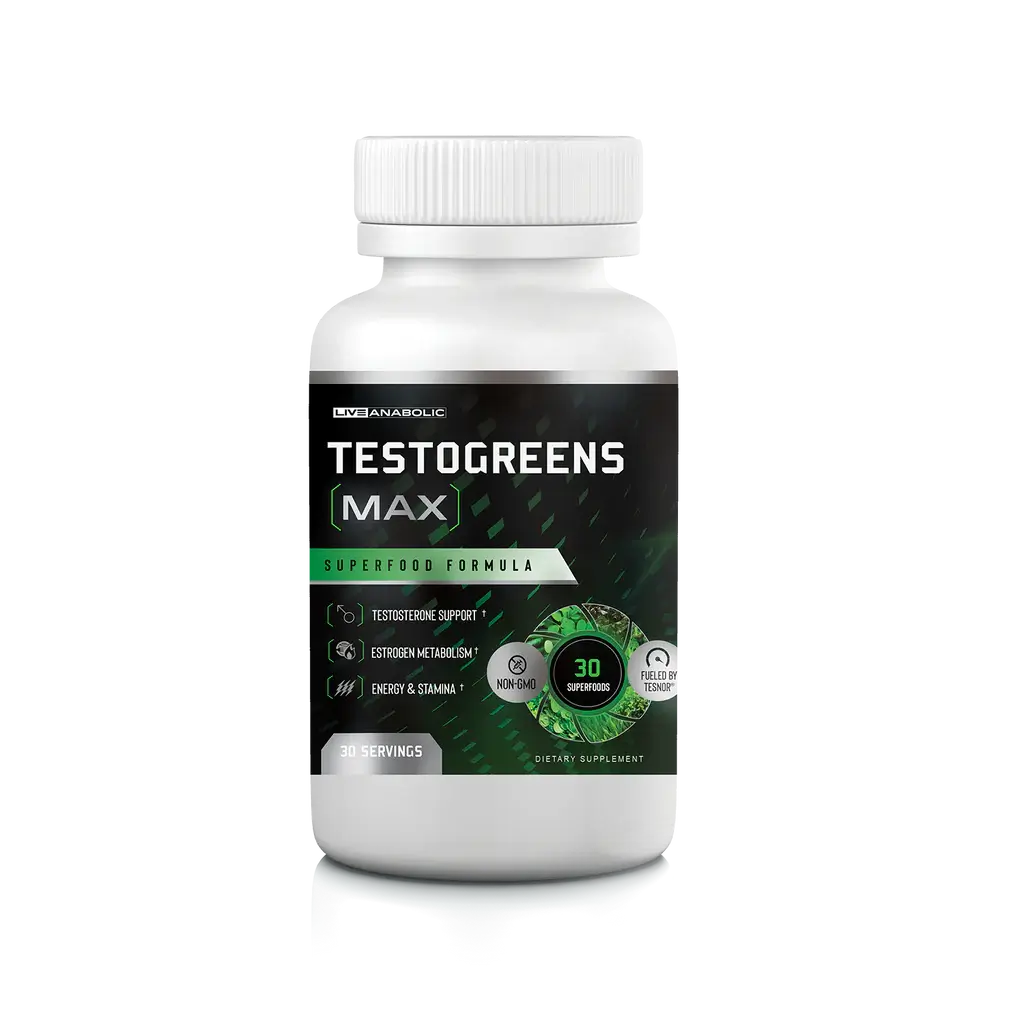
Cortisol and testosterone share precursor hormones in the steroidogenesis pathway. When the body is producing high cortisol from chronic stress, it has less capacity for testosterone production. Chronic work stress, financial stress, relationship stress, sleep deprivation, and overtraining all elevate cortisol. The interventions that reduce cortisol — meditation, breathwork, walks in nature, therapy, work boundary-setting, adequate recovery between training sessions — also indirectly support testosterone. Adaptogenic herbs like ashwagandha (included in TestoGreens Max alongside Tesnor and DIM) have clinical evidence for cortisol reduction in stressed adults.
Adipose tissue contains aromatase, the enzyme that converts testosterone to estradiol. The more body fat a man carries — particularly visceral belly fat — the more testosterone gets converted to estrogen, lowering the testosterone-to-estrogen ratio. Losing 10% of body weight in overweight or obese men typically improves testosterone by 50–100 ng/dL. The combination of resistance training, adequate protein, sleep prioritization, and modest caloric restriction (not aggressive cutting, which can suppress testosterone) is the proven path. Aggressive crash diets often reduce testosterone in the short term and should be avoided.
Even moderate alcohol intake (2–3 drinks) measurably suppresses overnight testosterone production. Heavy drinking suppresses testosterone for 24–72 hours. Beer specifically contains hops-derived phytoestrogens that may have mild estrogenic activity. The practical target: 0–2 drinks per week for men focused on testosterone optimization. This is one of the highest-effort, highest-impact interventions for men whose current alcohol intake is regular but not severe — cutting back from 5+ drinks per week to 0–2 per week often produces noticeable energy and motivation improvements within 30 days.
Normal total testosterone in adult men ranges from approximately 264–916 ng/dL, though this lab range is broad and often misleading. Functional medicine practitioners often consider 600–900 ng/dL the optimal range for vitality in active men. Free testosterone (the biologically active portion not bound to SHBG) typically runs 1–3% of total. Optimal free testosterone is generally cited as 100–150 pg/mL for symptomatic improvement. Below 300 ng/dL total testosterone with symptoms is generally considered clinically low and warrants endocrinologist evaluation. Between 300–500 ng/dL is the "low-normal" zone where many men feel symptomatic but aren't candidates for TRT — this is the population where natural intervention has the most room to help.
Get a complete morning hormone panel between 7 and 10 AM if you have multiple symptoms of low testosterone (persistent fatigue, reduced libido, slower workout recovery, stubborn belly fat, mood changes, brain fog, sleep issues). Request total testosterone, free testosterone, SHBG, and estradiol at minimum. Two morning tests two weeks apart give a more reliable picture than a single draw. Repeat testing every 6–12 months if you're tracking the effects of lifestyle changes and supplementation.
See an endocrinologist or your primary care physician if your total testosterone is below 300 ng/dL on multiple morning tests, particularly with significant symptoms (severe fatigue, erectile dysfunction, depression, significant muscle loss). Natural intervention is appropriate first-line for low-normal testosterone (350–500 ng/dL), but clinically low testosterone needs medical evaluation to rule out secondary causes (pituitary problems, primary testicular failure, medications causing the suppression) and to discuss whether TRT is appropriate. Never start or stop TRT without physician oversight.
Supplements like TestoGreens Max are best understood as a complement to the foundational lifestyle interventions, not a substitute for them. A man who sleeps 5 hours per night, eats poorly, doesn't train, drinks heavily, and is overweight will see disappointing results from any supplement. The same supplement can produce meaningful additive benefit when paired with the foundational practices. For men in the low-normal testosterone range with the lifestyle foundations in place, the patented Tesnor compound (clinically studied for testosterone effects), DIM for estrogen modulation, and Bioperine for absorption represent reasonable supplementation choices. Set realistic expectations: meaningful change takes 8–12 weeks of consistent daily use combined with the lifestyle foundations.
Independent functional medicine analysis of ingredients, pricing, and realistic results.
Read the Review →